Can You Learn to Drive in an Electric Car? Guidelines for Learners & Instructors
The rising popularity of electric vehicles has meant that learner drivers have even more choice as to what kind of driving experience they want. But can you learn to drive in an electric car? The simple answer is yes, and learning to drive in an electric car is going to be far more common in the years to come. The UK plans to phase out the sale of new purely petrol and diesel cars by 2035, subject to the current government policy, so we are going to see far more EVs on the roads.
In this article, we’re going to take an in-depth look at the options for both learners and instructors. We’ll examine the law around learning to drive in an electric car, including the pros and cons. We’ll look at the key differences between automatic and manual EVs and discuss the DVLA guidelines as they currently stand. We’ll also assess the impact the EV revolution is going to have on driving instructors and schools, ask can driving instructors use an electric car to expand their business, and what impact it will have on their insurance.

The rising popularity of electric vehicles
In 2023, motoring consumer experts CarGurus surveyed the UK’s attitude towards EVs and found that an increasing number of people could see themselves owning and driving an EV within 10 years. As the infrastructure becomes more widespread and EVs more common on UK roads, that number has risen. However, the introduction of Vehicle Excise Duty (VED) for electric vehicles from April 2025 may have tempered enthusiasm among some buyers.
However, there is a whole new generation of young drivers who are choosing EVs as their vehicle of choice, as it aligns with a more environmentally aware mindset. Whether EVs are actually greener than petrol or diesel (as far as upstream pollution is concerned) is open to debate. But regardless of the arguments, there is no doubt that by 2035, the number of EVs on UK roads will have increased dramatically.
Initially, the cost of EVs was high, but that too is coming down as they become more popular and major manufacturers release smaller models. The early worries about the lack of an infrastructure to support EVs are being addressed, and more rapid charging points are coming online across the UK. The ‘range’ of EVs has also greatly increased, making them a more practical choice for motorists.
Finally, they are regarded as easier to drive than traditional manual cars. The lack of a clutch means that they are fundamentally ‘automatic’ in nature, and for learner drivers, that makes them easier to master than a manual gearbox car. That simplicity makes electric cars a popular choice with young learner drivers, who are effectively the ‘EV Generation’ when it comes to motoring. The fact that there are no clutch pedal and no gear changing to worry about allows learners to focus on other elements of learning to drive in an electric car. However, that in itself comes with some caveats, which we’ll discuss shortly.
Can you learn to drive in an electric vehicle?
The simple answer is yes; if you can find a driving instructor who teaches using an EV, you can learn to drive in an electric car. However, there is the proviso that EVs are regarded as ‘automatic’ vehicles, so if you took your test in an EV, you would only then be allowed to drive automatic cars and not cars with manual gearboxes.
For the new students, though, this may not be too much of a stumbling block, as with the 2035 deadline looming for ICE vehicles, electric vehicles are expected to make up an increasingly large proportion of the UK vehicle fleet. Therefore, at this point, the limitation of only being able to drive automatic cars may not be a concern for the next generation of drivers.
Learning to drive in an electric car doesn’t mean you are restricted to driving only EVs. If you pass your test in an EV and receive a licence to drive automatic vehicles, you would be allowed to drive any automatic petrol or diesel car, or a hybrid automatic (one that features both a petrol engine and an electric motor). If you want to drive manual cars, you will need to take a second test to gain that entitlement.

Is there any such thing as a ‘manual EV’?
Because EVs use electric motors, there is no need for a manual gearbox, so technically, there is no such thing as a ‘manual EV’. Some brands have considered making EVs with simulated manual gear change features, but there is no mechanical purpose to the ‘pedal and gear selector’ mechanism. It is purely a software simulation for enthusiasts who want the sensation of driving a manual car.
What are the advantages of learning to drive in an electric car?
Putting aside the fact EVs produce no tailpipe emissions, there are a few benefits of learning to drive an EV. The simplicity of the automatic setup means that learner drivers can focus on other elements of the driving experience, such as road awareness, positioning, speed control and hazard perception.
The smoother, quieter operation creates a more relaxed environment for students, who can also hear the instructions given to them by their teacher quite clearly. This reduces the chances of incorrect reactions through misheard or misunderstood guidance due to excessive cabin noise. For students with hearing impairments, this single factor can make a huge difference to their driving experience.
One thing that all students dread is the embarrassment of stalling at a junction. In an EV, the motor cannot ‘stall’ in the same way that a petrol or diesel engine can, making this occurrence far less likely. Rectifying the situation if it does happen is also much easier and less taxing on a nervous student.
The law and DVLA guidelines for electric vehicles
As EVs have no clutch or manual gearbox, they are classified by the DVLA as automatic transmission vehicles. That means if you take your driving test in an EV, your licence will show Restriction Code 78. You are only allowed to drive automatic vehicles.
If you hold a Category B licence, certain weight restrictions apply, which can affect the type of EV you choose once you’ve passed your test. The MAM (Maximum Authorised Mass) limit is actually higher for EVs than ICE cars, to consider the weight of the batteries that make EVs somewhat heavier than comparable ICE cars.
There is no special permit required if you want to learn to drive in an electric car, but bear in mind that because of the extra weight and the unique regenerative braking feature on some EVs, it may take some getting used to.
Passing in a manual vehicle
If you take your test in a traditional manual vehicle, your licence will allow you to drive manual petrol and diesel vehicles, as well as automatic and electric vehicles. This is the more flexible and preferred option for learner drivers who are considering driving an EV. Because the cost of EVs is still high, it may be cheaper to buy a manual vehicle first to get some experience as a road user before switching to a heavier and more expensive EV.
Taking your test in an EV
If you want to take your test in an EV, the DVSA has some very specific guidelines that must be met. These include:
- The EV must meet standard test vehicle rules – That means, like any other test vehicle, it must be taxed, insured, roadworthy, and fitted with mirrors for the examiner
- The vehicle must be able to reach at least 62 mph (most EVs easily exceed this)
- The vehicle must have a speedometer in mph
- The vehicle must not have any autonomous driving mode active during the test
Top tips for driving instructors who are looking to use an electric vehicle
Electric cars for driving instructors open up a whole new area for business growth, especially as EVs are becoming increasingly the ‘norm’ rather than the exception. To stay up to date with the changing landscape of UK motoring, you’ll need to consider whether you want to keep teaching in a manual ICE car or if it’s time to make the switch to an EV. Here are a few things to consider before you make your final decision:
- Assess your local market – Before you swap to an EV, take a look at your local market. How many enquiries have you had concerning EV driving lessons? Are other instructors in the area offering EV options, and what kind of take-up are they getting? An EV is a considerable investment, so it’s important to make sure that you will have the demand necessary to justify your initial outlay. Does your local area have the capacity to cope with the increased demand in EV driving lessons and tests, or is the bias still towards manual petrol or diesel vehicles?
- Educating yourself on EV technology – EVs present a very different driving experience from petrol and diesel vehicles. You must familiarise yourself not just with current EV technology, but with potential developments and trends in the future. You will need to adapt your lesson structures to cope with the unique challenges faced when learning to drive in an electric car, as well as familiarise yourself with how the vehicles handle differently, how they respond to different inputs on the throttle control, the effects of regenerative braking, and so on.
- Adapting your teaching methods and lesson plans – From charging and range anxiety to teaching learners to perform a hill start without the use of a clutch, your lesson plans and teaching methods are going to be very different when students are learning to drive an EV. Your focus is going to be on energy-aware driving, roadcraft, and hazard perception, rather than the ‘mechanics’ of driving a manual car.
- Catering to increased EV demand – The rise in EV demand can actually be beneficial for your business. You can focus on promoting the eco-friendly nature of EVs, the fact that they are easier to learn, and that learning to drive in an electric car is a modern experience that’s a lot less stressful than getting to grips with the complexities of a manual vehicle. If there are only a few instructors using EVs in your area, this may be the perfect opportunity to advance your driving school business by investing in a learner-friendly EV. Larger schools could add EVs to their fleet to give students the option of learning to drive in an electric car as opposed to a traditional manual or automatic car.
The top electric vehicle cars for driving instructors
Manufacturers are releasing a slew of EVs, many of which are ideal electric cars for driving instructors. Compact, easy to drive, and with better range than many of their first-generation predecessors, these EVs are popular with both instructors and students. Our favourites include:
- MG4 EV - The MG4 EV is one of the UK’s most popular affordable electric cars. It’s particularly good value for money, has excellent driving dynamics and a driver experience, and is packed with equipment. Rear wheel drive with 50:50 weight distribution gives this hatchback unusually good handling for a budget EV. With a range of between 280 and 300 miles, depending on driving conditions and the model, make it an excellent electric car for driving instructors.
- Nissan Leaf – The Nissan Leaf is one of the world’s best known electric cars. It’s reliable, simple to drive, and widely used in the UK as an affordable entry level EV. The Leaf has a spacious interior and good visibility, which is helpful for learners. The Leaf E+ has a range of around 170-190 miles, making it a good choice for urban driving instructors.
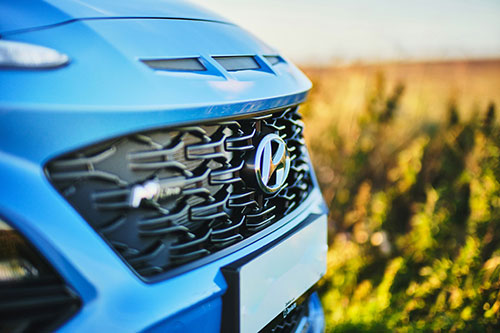
- Hyundai Kona – The Kona Electric is efficient, reliable, and very learner friendly, with the Kona 64 having a range of between 240-270 miles. Its smooth acceleration and simple controls make it a favourite with learner drivers.
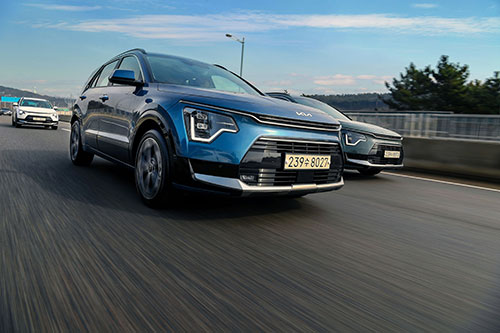
- Kia Niro - A tech rich, practical, efficient electric family crossover, the Niro has a long range of around 285 miles. Low running costs, a seven-year warranty, and easy maintenance make it popular with driving instructors.
- Renault Megane E-Tech – As with many Renaults, the E-Tech is stylish, design focused, efficient, and fun to drive. A low centre of gravity means it’s agile but composed, making it ideal for students learning to drive in an electric car.
FAQs
Is it easier to learn to drive in an electric car?
It’s easier to grasp the ‘mechanics of driving as you don’t have a clutch or gears to worry about. However, there are other elements of the driving experience that you need to adapt to, such as regenerative braking and throttle control.
Will learning to drive in an electric car limit me in the future?
With EVs destined to become the most common form of vehicle on the road and with the end of ICE vehicle sales set to come into effect in 2035, learning to drive in an electric car probably won’t limit your choices in the future. It may, however, limit your options up until that point.
Can I drive a petrol car after passing my test in an electric car?
You can if the petrol car is an automatic and falls within the entitlement specifications of a category B licence with restriction code 78. If it is a manual vehicle (with a clutch and gears), then you will not be able to drive it unless you take another test for a category B licence without restriction code 78.
Are driving lessons more expensive for electric cars?
This will depend on the school or instructor, as well as your location, the type of lessons you want, and the regional level of demand. As EVs can be more expensive to buy initially, instructors may increase the cost of learning to drive an electric car to cover their initial outlay.
Is driving instructor insurance more expensive for electric cars?
While eventually, every school will probably have to convert to teaching students to drive EVs, there is still a way to go before EVs are the only option. In the meantime, some factors can drive up the cost of insuring an electric car. Premiums for driving instructors have to take into account the length of time the instructor has been working, their location, age, and driving record. But the higher cost of initial purchase and the repair and running costs of EVs can also drive up insurance premiums.
It will, of course, depend on the vehicle choice and which insurance category it falls into. Smaller cars may attract lower premiums, but again, it will depend on factors such as vehicle value, repair costs, battery technology, security features and where the vehicle is kept overnight. It will also depend on whether the instructor is a fully qualified ADI or a PDI.
This is where talking to a specialist insurance broker can help. At Park Insurance, we’ve built up a reputation over 30 years for sourcing bespoke driving school insurance. We’re constantly evaluating the market and responding to changes, including the switch to EVs. That puts us in a unique position where we can use our ‘preferred broker’ status with some of the UK’s largest insurance providers to source competitively priced driving instructor insurance for EVs.
You can find out more by reading our Driving School Insurance page. Alternatively, contact us and talk to one of our expert advisors, or use our online form to get an instant, no-obligation quote. Call us today.