The DVSA Driving Test Backlog in 2026 - Advice for Instructors & Students
According to the National Audit Office, 75% of driving schools reported an average waiting time of 24 weeks to book a driving test in 2025, and the trend seems to have continued in 2026. Not only is the Covid-19 interruption still having repercussions more than five years later, but the changes to how car driving tests are booked and managed by DVSA, implemented this year, have further complicated matters.
The DVSA driving test backlog is impacting not just learner drivers anxious to get their full licence but also driving instructors.
In this article, we’ll take a look at the current situation, what’s changed, and the direct impact these changes are having on the livelihoods of the UK’s driving instructors. We’ll also take a look at some solutions as to how to minimise the financial impact on your driving school business, and how learner drivers can navigate their way not just along Britain’s roads, but the DVSA system too.
What is the DVSA driving test backlog?
The DVSA backlog is a perfect storm of leftover effects of the COVID-19 shutdown and new procedures introduced into an already strained system. Delays in getting practical driving test appointments across the UK are a bit of a postcode lottery, with some areas looking at delays of around 12-14 weeks, while others are struggling with hold-ups of 24 weeks or more.
Regardless of where you live, multiple reports indicate nationwide delays in 2026. Typically, the shortest waits are in rural areas where demand is lower. But in urban centres, where the volume of students seeking a driving test slot is much higher, delays are longer.

Why is it a major issue in 2026?
With demand massively outstripping supply, driving test delays have become a significant challenge affecting learners, instructors and employers alike. A surge in demand for the next generation of young drivers has further strained the system.
In rural areas, where public transport is limited, young drivers need to get on the road to reach college or a job. If they cannot get a test for weeks or even months, it can have a serious impact on local economies, making it increasingly difficult for businesses to recruit staff due to transport issues.
The backlog from the COVID-19 years continues to affect us. It’s estimated that the pandemic caused over 1.1million tests to be cancelled or delayed. Nearly a third of those still hadn’t been booked by late 2025, according to the National Audit Office report.
As well as this, and despite repeated campaigns by the DVSA, recruiting and retaining sufficient driving examiners has proven challenging with the original target of an additional 400 examiners to cope with the demand failing to materialise.
AI has also had an impact. Reports have highlighted instances of automated booking software being used to secure and resell test slots at significantly inflated prices - compared to the official DVSA fee of just £62.
All of this comes together to make the driving test backlog a major issue in 2026.
What’s changed in 2026?
The end of March 2026 brought a raft of changes to how driving tests are booked and who can book them. Previously, you were allowed up to 6 changes to a driving test booking, making the system more flexible for students who may not have been ready to take their test. As of March 31st, 2026, only two changes are allowed. Swapping a date or time, appointment, or changing a test centre all count as changes.
Before, driving instructors could book test slots for their students. After May 2026, only students could book and manage their tests through the GOV.UK website. Learners are now encouraged to use their instructor’s ADI personal reference number to prevent double bookings as well.
And finally, the 2026 changes mean that, from June, learners can only move their tests to the three nearest test centres. Previously, learners could take their test anywhere in the country.
While the changes are designed to make the system fairer for all learners and prevent misuse (such as bot bookings), the truth is that they have not had much impact on the DVSA driving test backlog caused by the pandemic.
How does the DVSA driving test backlog affect instructors?
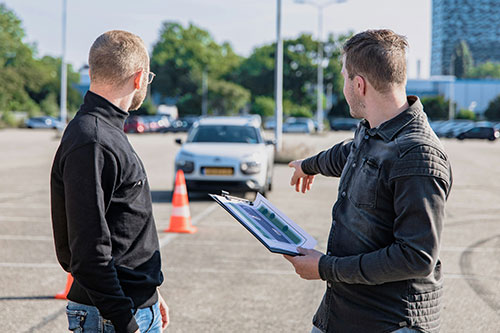
The test appointment backlog and the changes brought in during 2026 have directly affected instructors. The fact that driving instructors now no longer have control over test bookings means that lesson plans and availability could be disrupted. Students, desperate to secure a slot, could book a test before they are ready, affecting lesson planning and putting increased pressure on instructors to get their students through the driving test.
The scramble for slots and the fact that driving instructors have far less control over the process could also ultimately affect income predictability. Cancellations and scheduling issues make it difficult to plan ahead, preventing instructors from upscaling their business.
How does the DVSA driving test backlog affect students?
Taking your driving test is stressful enough without the added burden of dealing with the DVSA's bureaucratic challenges. Pupils now have to concentrate not only on their mirrors but also on the admin side, booking their own tests and finding an appropriate test centre. The knock-on effect could also include delays in job and university offers, especially for rural drivers. The increased cost of extra lessons to keep the skill set ‘fresh’ while they wait for a test slot to open up can deter many young drivers from taking their test at all.

What are the measures to avoid any further delays?
It’s not all doom and gloom. While there’s no doubt that the backlog has caused problems for both students and instructors, there are ways to mitigate the effects.
Increasing examiner capacity is the DVSA's primary goal, though 19 recruitment drives since 2021 have had limited success. However, more candidates are coming forward, and it is hoped that the imbalance between availability and demand for driving examiners will eventually be redressed.
Restrictions on bookings and the elimination of ‘bot’ bookings (where algorithms snap up test slots the second they are posted), as well as preventing instructors from block-booking slots, could mean a fairer distribution of availability, especially in high-demand areas.
The availability of short-notice cancellations will also help to relieve the pressure, as long as they are easily accessible to students.
Tips for learner drivers
To avoid the impact of the driving test backlog, there are some things you can do as a student to ease the pressure:
- Liaise with your instructor and take their advice on booking when you’re ready.
- Get all your paperwork in order in advance, including your theory test (you have two years from the date of passing your theory test to take your driving test, so there is no rush).
- Don’t panic-book a test. The temptation may be strong to take a test as soon as you can but consider that you may not be ready and that you may ultimately fail. This will add more cost to the process, including extended lesson plans and rebooking a second test.
- Use the time wisely. Work out a lesson plan with your instructor that keeps your skill set sharp up to the time of your test without overstretching yourself financially.
- Be flexible with your location. Remember that you can only change the details of a driving test booking twice now, so make sure your time slot and location suit your schedule.
Tips for driving instructors
Driving instructors can also help to lessen the effect of the DVSA backlog and make things easier for both your business and your students:
- Manage students’ expectations. If they are not aware of the issues with the driving test backlog, make them aware of it from the outset. If they understand that it is unlikely that they’ll be taking their test in two weeks, they’ll feel more relaxed and more focused on learning the skills they need to be on the road.
- Encourage your students to be flexible and be a little more adaptable with their own schedules. For example, suggest a more measured process as compared to an ‘intensive driving course’, and keep an eye on the availability of tests in centres in your area.
- Review your teaching strategy. A longer waiting period for test slots means you can fine-tune your teaching plans to correct any issues your students may have. This can lead to a higher pass rate for your school and enhance your reputation as an instructor.

Future outlook for 2027
While the situation regarding DVSA driving test backlogs has not been optimal, there are indications that things will start to ease over the next 12 months. DVSA reforms are ongoing, and the government and DVSA initiatives are aimed at reducing waiting times. The continued recruitment of examiners is a priority – that target of 400 new examiners is still in play, although there’s no indication that it will be achieved any time soon.
Technology solutions designed to make the booking process easier will help, as long as tests become available. And while there are improvements in the pipeline, driving instructors and students will need to be patient to see the fruition of the DVSA's efforts to eliminate the current backlog by the end of 2027.
Park Insurance – The driving instructor’s partner
For over 30 years, Park Insurance has been providing bespoke driving instructor insurance for schools and individual instructors alike. Our expertise, experience, and position as preferred broker to some of the UK’s largest insurance providers mean we can find cover that suits both your needs and your budget. You can find out more by visiting our driving school insurance page. Or contact us direct for more information and a customer-focused conversation with one of our experienced advisors. Call us today.